Fish of Lake Trakošćan
Did you know...
Experts can tell the age of a fish according to its scales. Namely, as fish grow and develop, the number of body scales increases. Moreover, older scales get bigger and they grow, so the older fish have more growth zones on their scales than the younger ones.
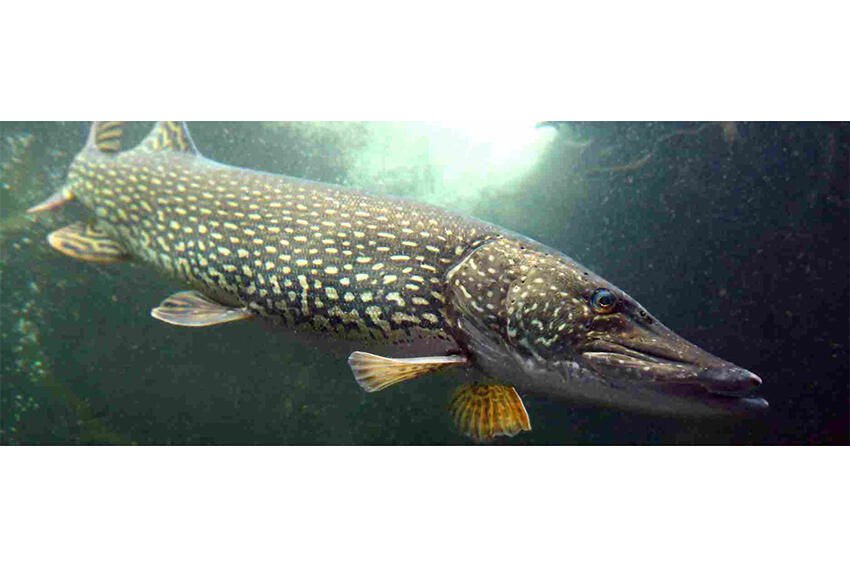
Northern pike is a fish usually known as the greatest predator of them all. Adult pike hunts even for its own offspring. It has sharp teeth in its mouth, which it uses to firmly catch the prey – mostly fish, but it can also attack birds and mammals. It hides in the underwater plants thicket and being completely still, lurks at its prey.
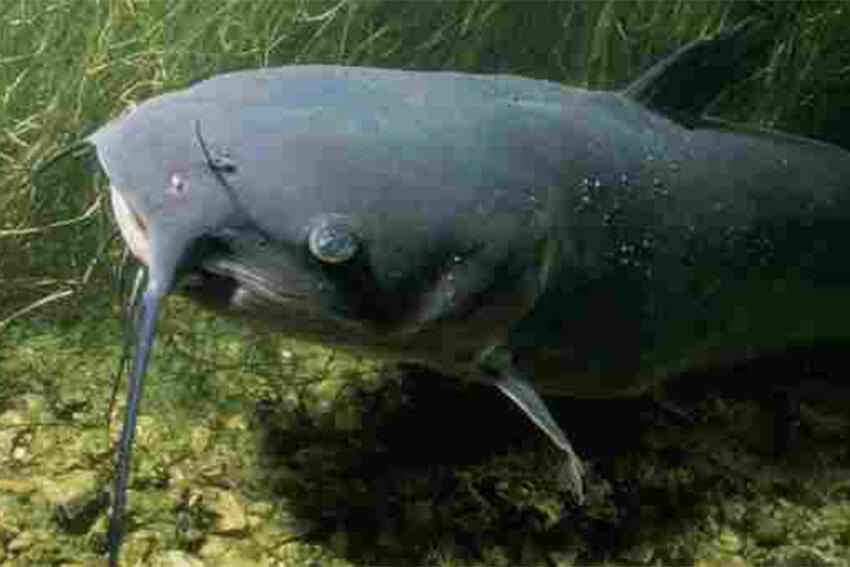
Wels catfish is a fish that lives near the bottom of the rivers and large lakes. It moves and hunts mostly at night, is ravenous and predatory, and besides fish, it also eats aquatic mammals and birds that swim on the water surface. It has two long barbs on the side and four smaller ones under the mouth. The barbs serve as sensory organs, but also as fish baits.
FISH OF LAKE TRAKOŠĆAN
Fish appeared more than 450 million years ago and were the first vertebrates on Earth. Today, fish are classified into five groups: hagfish, northern lampreys, cartilaginous fishes, ray-finned fish and lobe-finned fish. Lake Trakošćan is inhabited by ray-finned fish, which is the most various and numerous vertebrates group.
The body of ray-finned fish is adapted to water-life with its shape and structure. The skin of the fish releases slime which, together with the smooth scales, decreases water resistance during swimming. The scales are partly wedged into the skin and are arranged like roof tiles. There is also a lateral line on the skin, which is a sensory organ that enables the fish to feel vibrations, as well as the intensity and direction of water currents. On the body surface, there are paired and single fins, which mostly serve for moving. However, the fins also have other roles: colours and patterns on their surface can represent signals for warning the predators, attracting the opposite sex, defending the territory or luring their prey.
Most of the ray-finned fish have a swim bladder, which is a bag filled with a mixture of gases that helps them maintain their position in the water. Some fish use it to generate and receive sounds. With the majority of fish, the exchange of oxygen and carbon dioxide between the water core and body is done through the gentle and blood-supplied tissue of the gills.
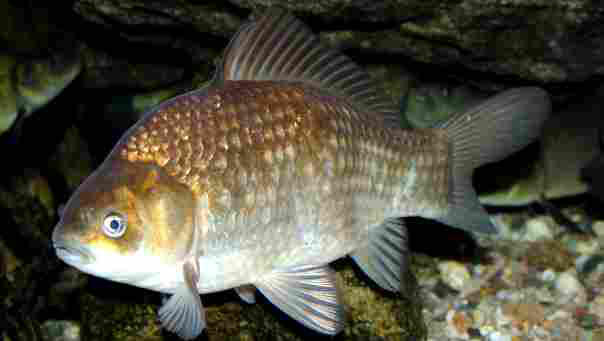
Fresh water fish interconnect the food chains and enhance circulation of nutrients, and are one of the best indicators of conditions in a water ecosystem. Due to the increasing human pressure on water habitats, fish have become the most endangered vertebrates group. Key reasons for such a situation include: introduction of non-indigenous species like the Prussian Carp or Pumpkinseed, pollution and regulation of water flows, depletion of fish stocks and habitat degradation.
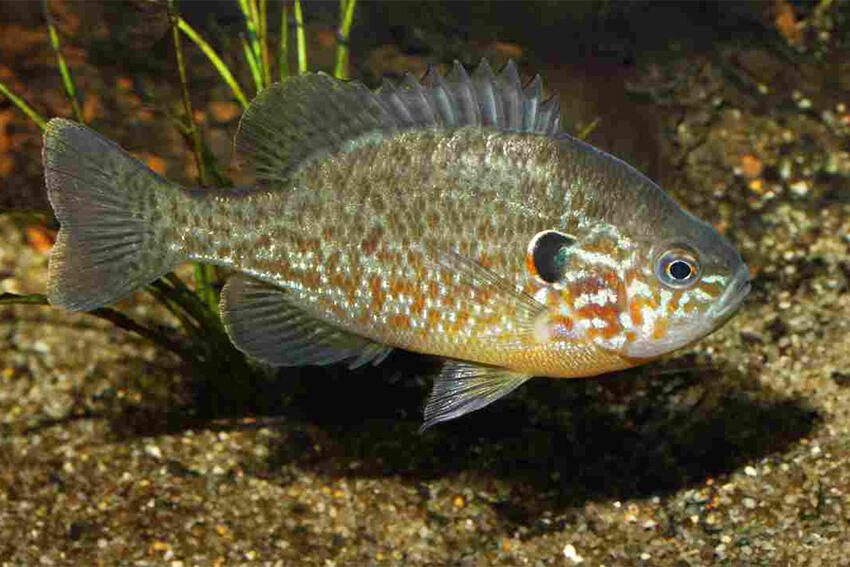
Pumpkinseed
Pumpkinseed comes from North America. It has been transferred to Europe as an aquarium fish because of its attractive looks, but it was human disregard that caused its spread across nature. It has reproduced extremely fast, and poses a serious threat to many indigenous species. Although it is small in size, it is very aggressive and of predatory behaviour. It eats small water animals which it can catch and swallow, including the spawn and fry of other fish species.
Pumpkinseed females lay 5000 eggs into little nursing holes dug out by a male. Unlike most European species which lay their eggs on aquatic plants, pumpkinseed males devotedly defend their spawn and newly-hatched larvae from the larger fishes. This makes pumpkinseed more competitive in relation to other fish species.