Gallery of children's portraits
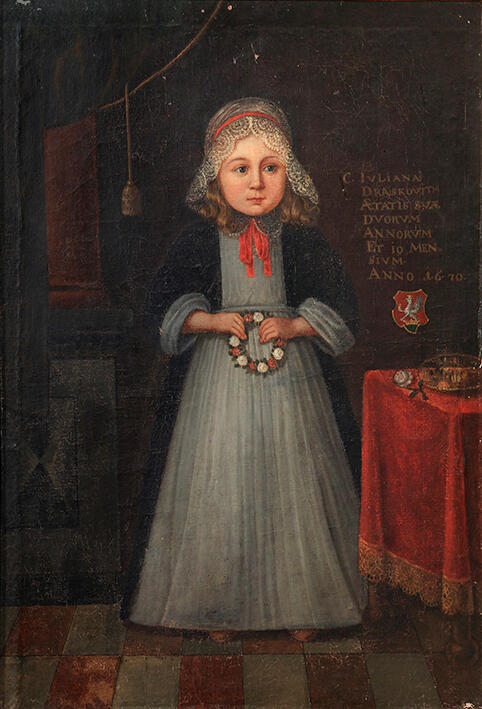
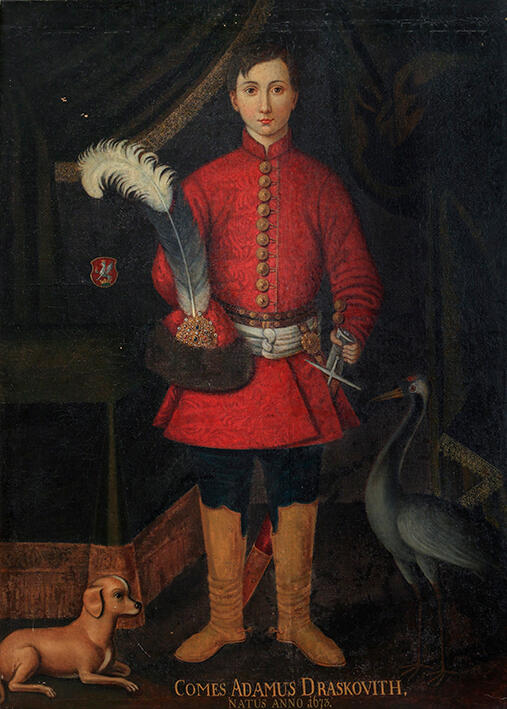
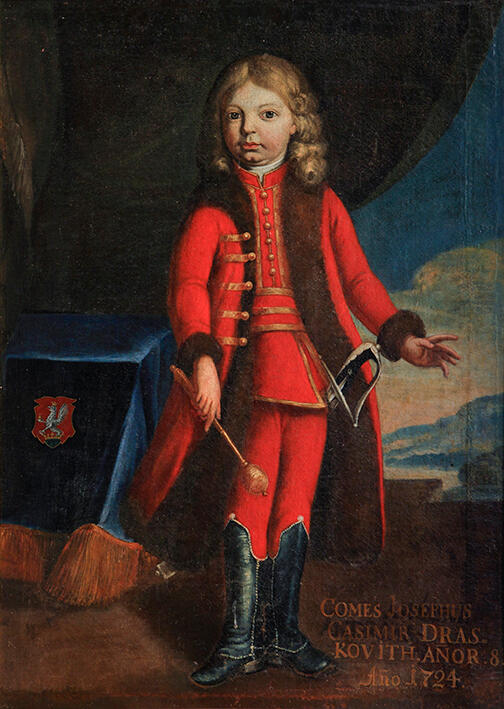
The children's portraits of the Drašković family members have range from the late sixteenth century through to the mid-eighteenth century and are a unique set in the northwestern Croatia. They are a remarkable historical source for studying everyday life, fashion and equipment of the nobility of that era. The related attributes, animals and plants point to the high social position and wealth of the family in which the children were born.
The portrait of Ivan V Drašković features an unusual representation of a dog with a human face, probably a self-portrait of the painter himself. In some portraits, there is a noticeable disproportion in the body structure that resulted from copying the heads of the painted figures. The copying was due to the high costs of paintings and the high mortality rate of children. The custom was that after a child's death its portrait was stored. After a while, a head of the new child and the inscription with the child's name would be added on the same canvas.